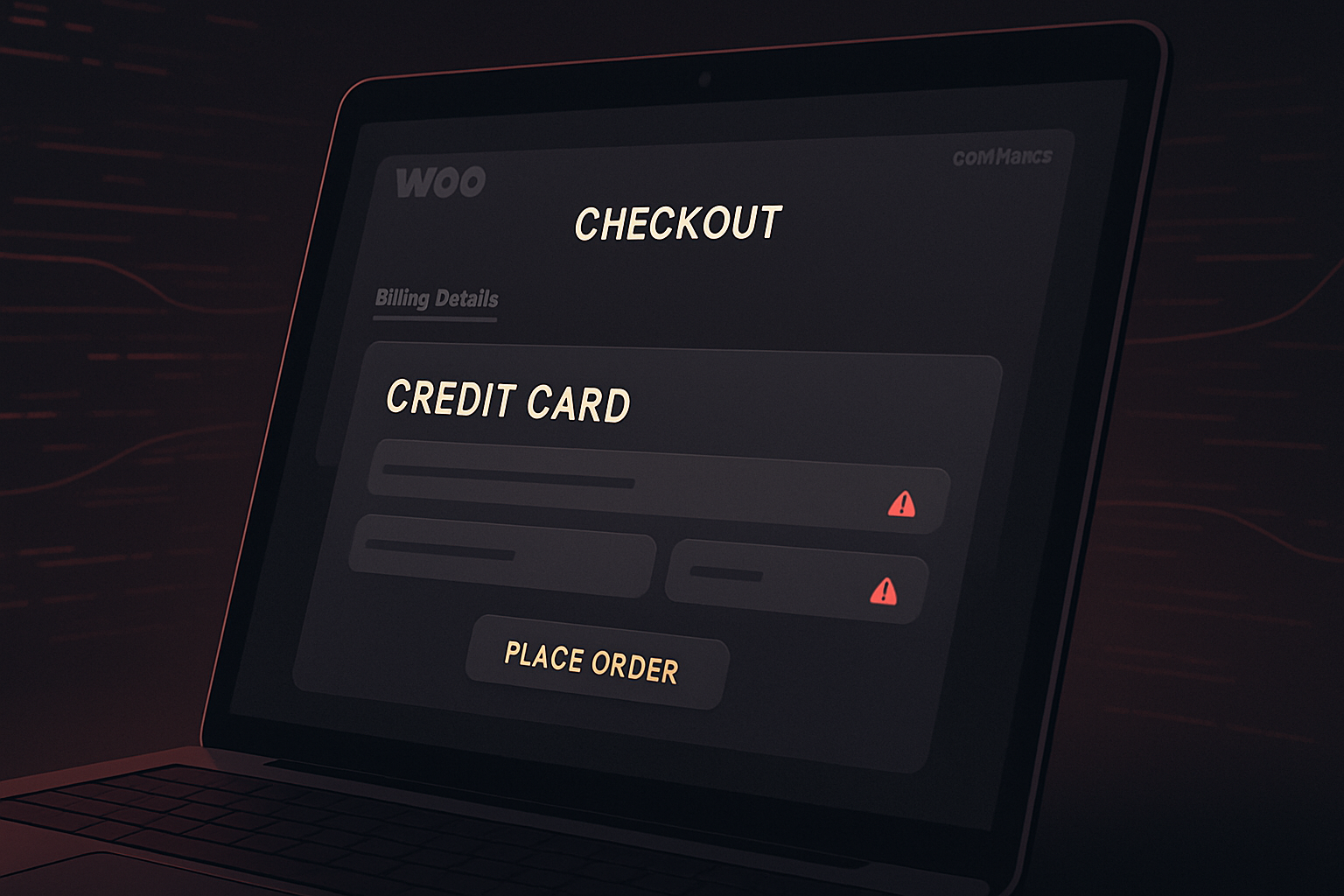
Payment skimming attacks targeting e-commerce platforms have evolved beyond simple SQL injection and cross-site scripting. A recent wave of exploitation targeting the Funnel Builder plugin for WordPress demonstrates how attackers are leveraging plugin vulnerabilities to inject malicious JavaScript directly into WooCommerce checkout flows—capturing payment card data before it reaches legitimate payment processors.
How the Attack Works
The vulnerability allows unauthenticated or low-privileged attackers to inject arbitrary JavaScript code that executes on the checkout page. Once injected, the malicious script intercepts payment form submissions, exfiltrating card numbers, expiration dates, and CVV codes before the legitimate request reaches the payment gateway. This happens transparently to the customer—no error messages, no visible anomalies. The checkout process completes normally whilst the attacker's infrastructure captures credentials in parallel.
The sophistication lies in the timing. Rather than breaking the checkout flow (which might trigger immediate support tickets and investigation), skimming code sits passively, collecting data from every transaction. Detection often takes weeks or months, by which point thousands of transactions may have been compromised. Security researchers at Sansec recently documented active exploitation of this particular Funnel Builder vulnerability, indicating the flaw is already weaponised in the wild.
Infrastructure and Hosting Implications
Hosting providers serving WordPress and WooCommerce installations face several operational challenges here. First, detecting compromised sites requires either runtime instrumentation or post-incident forensics—both resource-intensive. A site running normally with legitimate traffic patterns may harbour malicious injection code that only reveals itself in payment processing logs or through external security scanning.
Second, the vulnerability landscape around WordPress plugins remains fragmented. There is no CVE assigned yet, meaning automated patch management systems won't flag the risk until formal disclosure occurs. Administrators relying on automatic updates may assume their systems are secure when they are not. Infrastructure teams should implement plugin-level monitoring beyond just version tracking—examining loaded JavaScript sources and monitoring outbound connections from checkout pages can surface suspicious activity before data loss accelerates.
For those running shared hosting environments, a single compromised WordPress installation can become a vector for lateral reconnaissance. Attackers may probe adjacent sites on the same server, looking for additional e-commerce targets or weak configurations to exploit.
Detection and Response Strategies
The most reliable detection method involves inspecting page source code and network requests during an actual checkout process. Look for unexpected <script> tags loading from external domains, or JavaScript making POST requests to unfamiliar endpoints during form submission. Web Application Firewalls (WAF) configured to monitor and log JavaScript execution patterns can alert on suspicious behaviour, though this requires tuning to avoid false positives on legitimate analytics and conversion tracking.
Response should include immediate isolation of the affected WordPress installation, database forensics to identify when the injection occurred, and payment processor notification to begin fraud mitigation. If the site uses SSL/TLS (as it should), the attacker's code cannot intercept traffic in transit, but it can still steal data from the DOM before it's encrypted—so HTTPS is not sufficient protection against this threat vector.
Infrastructure teams should also pressure their WordPress plugin suppliers to implement Content Security Policy (CSP) headers, which restrict the origins from which scripts can be loaded. A strict CSP would prevent externally-hosted malicious scripts from executing, though injected inline scripts remain a concern.
Broader Lessons
This incident underscores a fundamental truth: plugin-based extensibility is powerful but creates a large surface area for compromise. Each plugin is a potential entry point, and WordPress's popularity makes it a high-value target. Administrators managing e-commerce infrastructure should treat plugin security with the same rigour applied to core application hardening—regular audits, timely patching, and network-level monitoring of data exfiltration.
For hosting providers offering managed WordPress or WooCommerce services, proactive threat detection and security scanning have moved from competitive advantage to operational necessity. The cost of reactive incident response far exceeds the cost of preventive monitoring.