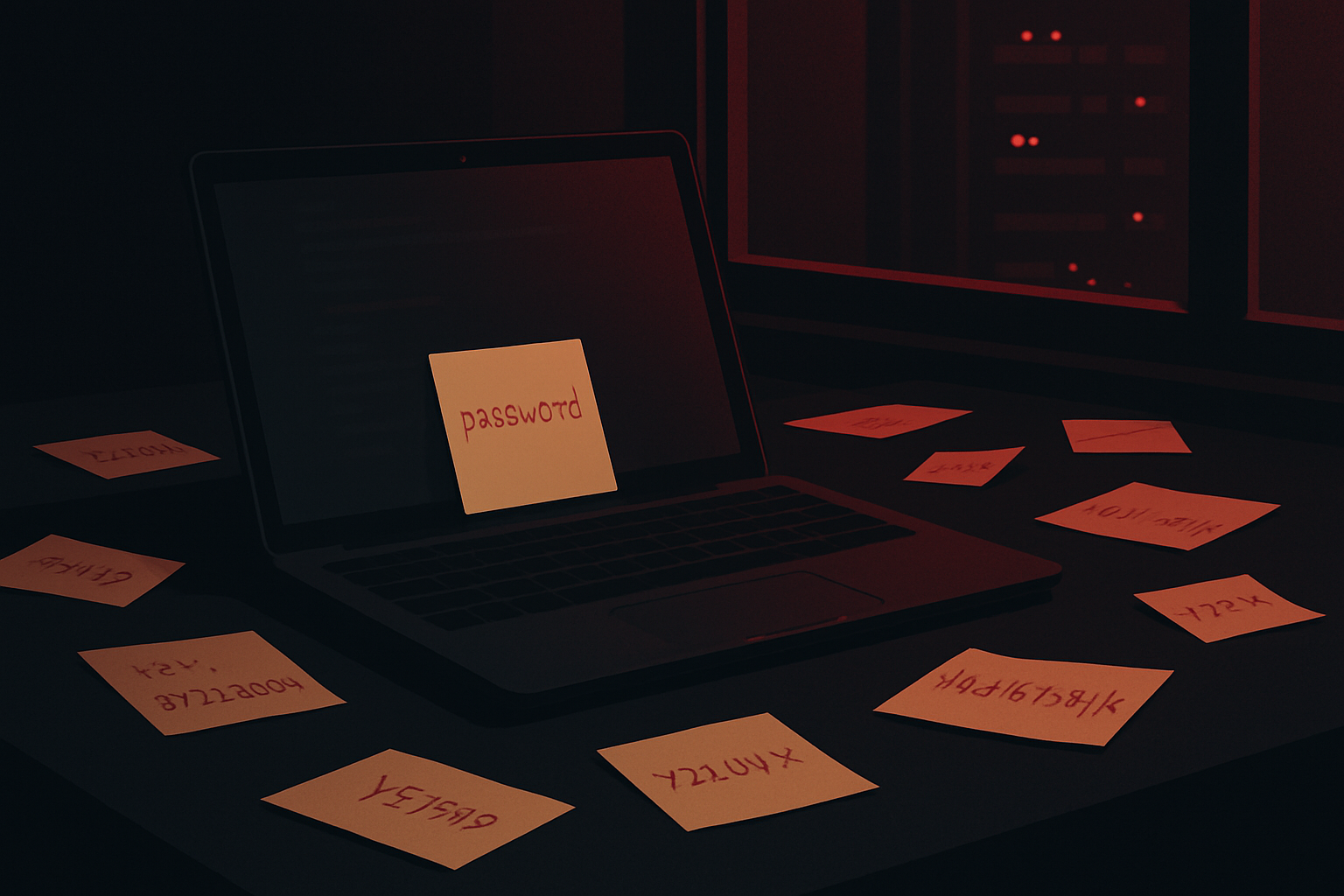
An AI agent sits quietly on a developer's laptop, running inference jobs, storing API keys and database passwords in memory, with full access to internal services. Nobody formally approved it. Nobody owns the risk. In any other context—a contractor with production database credentials and no oversight, a service account that skips authentication logs—this would trigger an incident response. Yet when the actor is an AI agent, many organisations treat it as a productivity feature rather than a security liability.
The Credentialing Problem
Local AI agents often need credentials to function. Developers feed them API keys, database connection strings, and authentication tokens to make them useful. Once those secrets are loaded into an agent's context or memory, they persist across sessions. The agent may be stateless from an application perspective, but the operating system running it sees a process with full access to whatever secrets the developer provided.
This differs from traditional application deployment. When you run a web service in your infrastructure, secrets are injected via environment variables, mounted secrets, or key management services. Access is logged. The service identity is auditable. A developer cannot simply hand an app a collection of credentials and call it done.
Local AI tools sidestep that discipline. A developer installs an agent, feeds it credentials out of convenience, and moves on. The agent persists. It may auto-start. It may interact with multiple systems. And if the machine is compromised, or if the employee leaves, those credentials remain accessible—not to an identifiable service, but to an opaque process running user code.
The Absence of Ownership and Audit
Infrastructure and security teams typically maintain an inventory of systems that access production environments. Databases have owners. Service accounts have owners. Access requests go through formal channels. Quarterly audits verify that every credential holder still has a legitimate need.
An AI agent running on a local machine rarely appears in that inventory. The developer who installed it may not report it. There is no formal access request, no owner assignment, no periodic review. From the perspective of compliance and auditing, it is invisible.
This invisibility becomes dangerous at scale. If dozens of developers across an organisation are running AI agents locally, each with its own collection of secrets, the total attack surface grows rapidly. An attacker who compromises any one of those machines gains entry to multiple systems, each with different access levels and audit postures. A breach becomes not a single incident but a cascade.
The Hosting and Infrastructure Angle
Teams managing offshore hosting, VPS, or dedicated server infrastructure feel this risk acutely. A developer running an unowned AI agent on their local machine might use it to query staging or production databases on a remote server. The agent could generate reports, run migrations, or test configurations—all without leaving the kind of audit trail you would expect from an API call or CLI tool.
If that developer's machine is compromised, or if the employee leaves without offboarding the agent, the door to your infrastructure remains open. The agent's credentials still work. No one noticed it was even there.
Infrastructure teams can begin to address this by treating local AI agents the same way they treat any other external access to production systems. Require formal registration of tools that authenticate to production services. Log all agent-initiated requests at the database or API gateway level. Use service accounts with minimal privileges, rather than developer credentials with broad access. Rotate or revoke credentials when the agent's purpose changes or when an employee leaves.
Toward Practical Controls
The solution is not to ban AI agents—they solve real problems—but to bring them into the scope of access control and auditing. Treat them as service accounts that happen to run on local machines. Require the same scrutiny you would apply to any other system accessing sensitive infrastructure.
This means establishing a registry, documenting what each agent does, who owns it, and what credentials it holds. It means logging agent activity so that if something goes wrong, you have a record. It means rotating or revoking credentials at regular intervals, and ensuring that offboarded employees do not leave active agents behind.
The hardest part is cultural. Developers naturally want tools that make their work easier, and AI agents are genuinely useful. The challenge is helping teams see that formal oversight does not kill productivity—it protects it by preventing the kind of breach that shuts down infrastructure entirely.