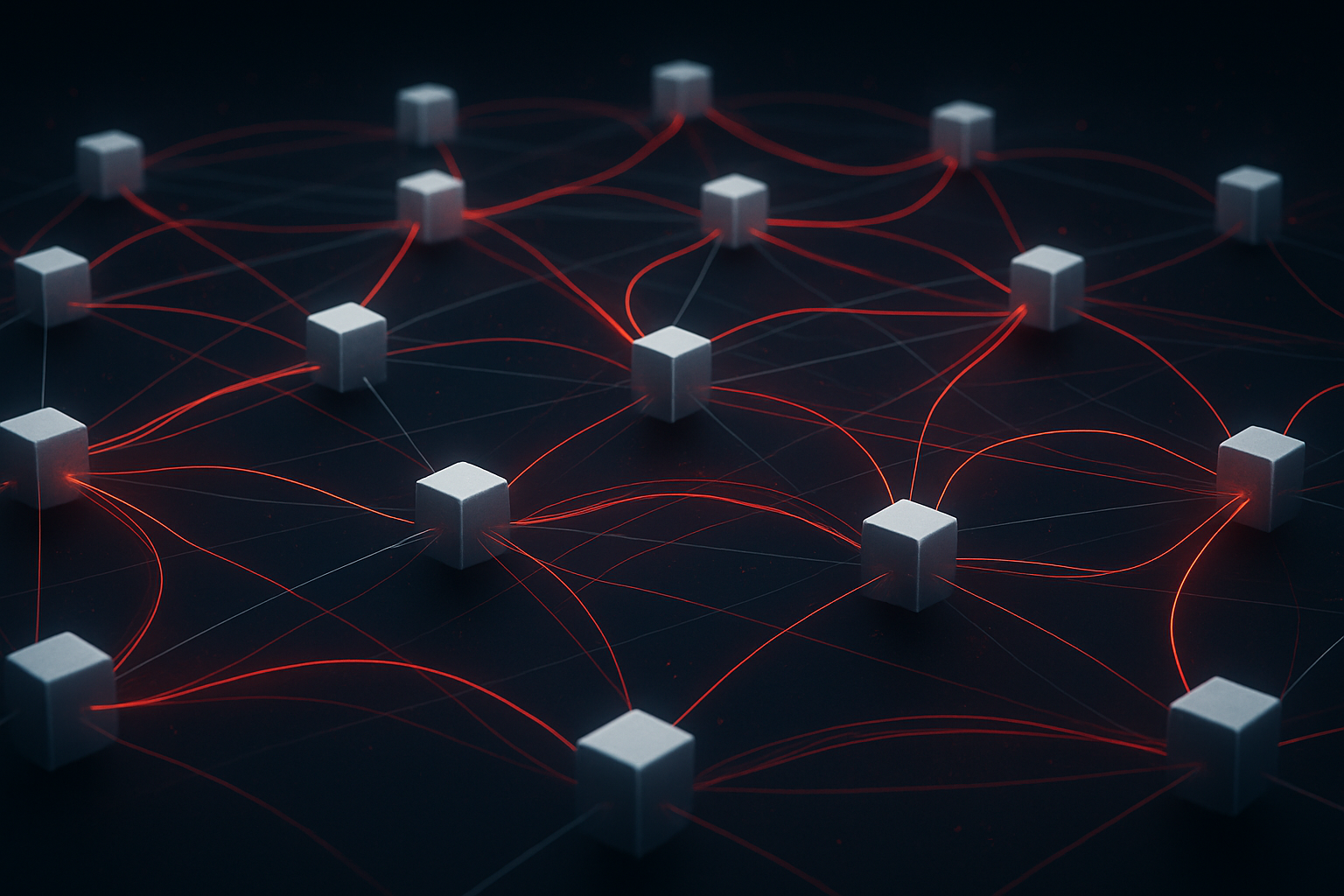
Over the past twenty years, researchers at Delft University of Technology have been working on Tribler, a decentralized BitTorrent client engineered from the ground up to be functionally impossible to shut down through conventional means. Their latest work applies these resilience principles to seedbox infrastructure itself—creating self-replicating nodes that distribute content across a network without centralised control points. For infrastructure engineers, the architectural decisions embedded in this research offer genuine technical insights into building systems that can survive adversarial pressure.
Resilience through distributed state management
The core problem Tribler tackles is straightforward: traditional seedboxes and torrent infrastructure depend on centralised points of failure. Take down the tracker, and you disrupt the whole operation. Block the seedbox's IP, and content distribution stops. A truly decentralised seedbox flips this model by spreading the seed operation across many independent nodes, each capable of serving content and bootstrapping new replicas autonomously.
This isn't merely about redundancy. The critical distinction is that no single node holds all the metadata, no single authority validates peer lists, and no single point can be pressured into compliance. State management becomes distributed—each node maintains its own view of the network topology and content availability, synchronising through the protocol itself rather than querying a central registry.
For operators running infrastructure in jurisdictions where content liability is a genuine concern, the architectural principle here is valuable: if the seedbox never "knows" what it's serving (because metadata is encrypted or dispersed), and if replication happens automatically across untrusted nodes, the operator's legal exposure changes materially. This doesn't eliminate responsibility—it changes the technical architecture of accountability.
Self-replication as infrastructure elasticity
Where the research becomes operationally interesting is in self-replication. Rather than requiring administrators to manually provision new seedbox instances, the system bootstraps new replicas when network conditions warrant it. A node detects that content is bottlenecking at one location, initiates a replica, and the network self-heals.
This resembles container orchestration or auto-scaling infrastructure, but inverted. Instead of centralised orchestrators (Kubernetes, Lambda, etc.) deciding when to spin up capacity, the decision emerges from the network's distributed state. Each node measures local congestion, peer availability, and redundancy; when thresholds are crossed, replication occurs. No single scheduler, no single point of configuration.
The operational implication is reduced management overhead. A seedbox operator or collective doesn't need to predict demand, provision capacity, or maintain monitoring dashboards. The network adapts. Of course, this comes with trade-offs: harder to optimise, less predictable resource consumption, and more complex debugging when something goes wrong.
Governance and operator incentives
The research frames this system as supporting decentralised digital democracy—the idea that information distribution itself should not be controlled by any single entity. But at the infrastructure level, this raises a practical question: who maintains the nodes, and why?
The Tribler project's focus on long-term funding suggests one answer: institutionalised support from universities and grants. But in practice, decentralised seedbox networks tend to rely on volunteer operators—people willing to run nodes for ideological reasons, or because they consume the content themselves.
This creates an alignment problem. Volunteers have limited capacity and unpredictable availability. If a network depends on a dozen well-intentioned operators, and half go offline, resilience collapses despite the decentralised design. Some projects address this through cryptocurrency incentives—operators earn tokens for bandwidth or storage contributed. Others gamble on sufficient ideological commitment.
For commercial operators considering similar architectures (whether for content distribution, privacy services, or alternative DNS), the takeaway is stark: decentralisation solves one problem (resistance to centralised takedown) but creates another (operator recruitment and retention). The technical design is only half the battle.
Closing thought
The seedbox research emerging from two decades of BitTorrent development represents a mature engineering approach to infrastructure resilience. The techniques—distributed state, autonomous replication, removal of centralised authority—are not novel in themselves. What's noteworthy is how thoroughly they've been applied to the specific problem of content distribution under adversarial conditions.
For infrastructure teams building services in restrictive jurisdictions, or those operating in legal grey areas, the architectural principles offer a blueprint: distribute not just for performance, but for survival. The tradeoff is complexity and operational unpredictability. That's not a trivial cost, but for some use cases, it may be worth paying.