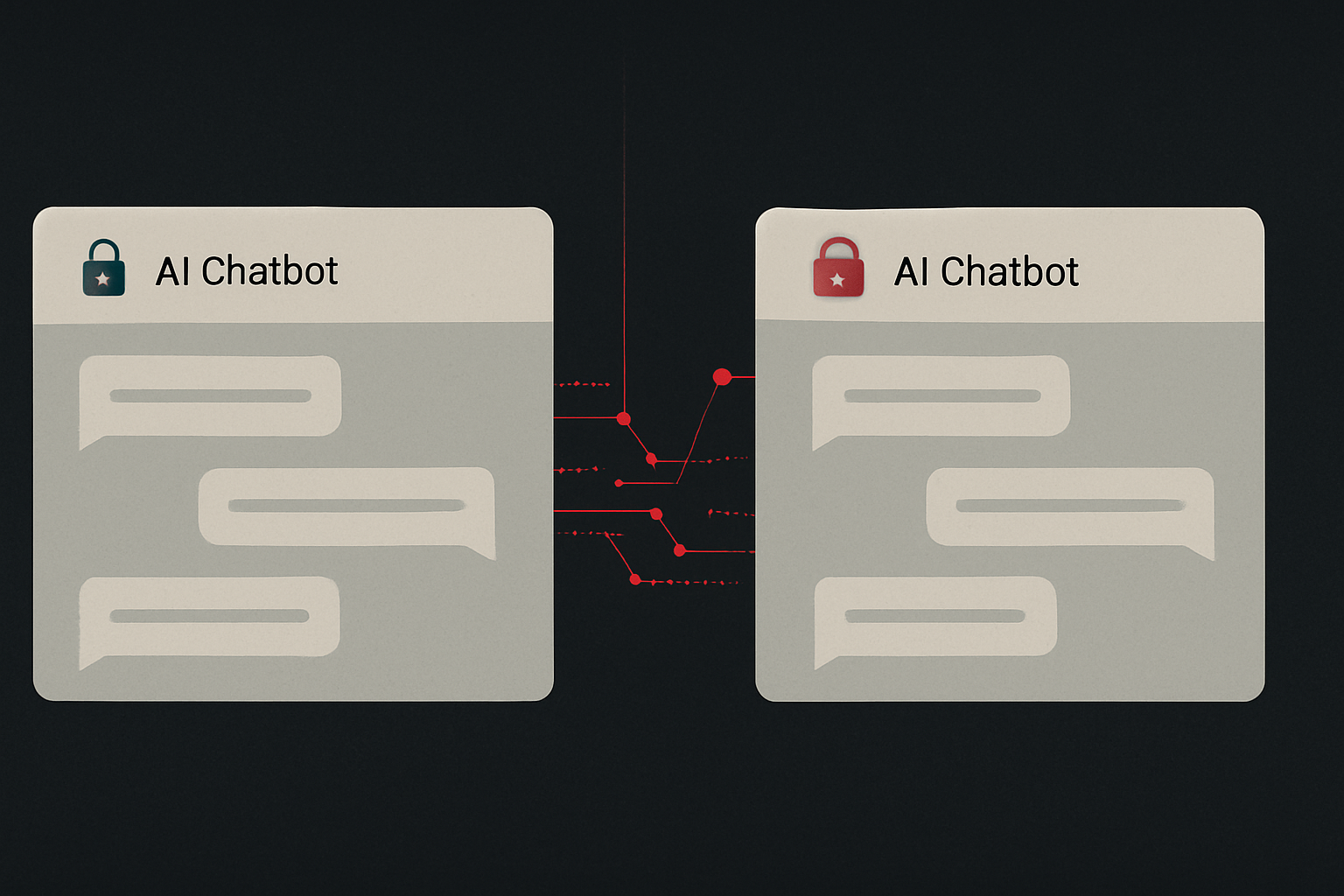
Researchers have identified a coordinated phishing operation deploying fake advertising management portals for major AI services—ChatGPT, Gemini, Claude, Perplexity, and others. The infrastructure behind these attacks reveals how modern credential-harvesting campaigns work at scale, and why the distinction between application-level security and hosting-level resilience is blurring.
The Misdirection Layer
The attackers registered domains mimicking legitimate AI vendor ad platforms, complete with professional branding and functional login flows. Users searching for official advertising consoles would land on these imposters, believing they were accessing real services. The portals captured not just usernames and passwords, but also time-based one-time passwords (TOTP) and SMS-based MFA codes—suggesting the attackers operated the phishing sites in real-time, with operators standing by to immediately use captured credentials before MFA windows closed.
This human-in-the-loop approach matters to infrastructure operators. Traditional credential-capture attacks assume passive collection; here, the attackers maintained live access to harvested sessions, likely through SSH access to the phishing servers themselves or through backend credential APIs. That infrastructure footprint—the phishing portal hosting, the credential database, the real-time relay channels—requires a non-trivial hosting setup.
Why MFA Wasn't Enough
Multi-factor authentication reduces risk, but only if the MFA window isn't held open by an attacker with live access to the phishing portal. If a user entered their TOTP code into the fake portal, and an operator immediately forwarded that code to the legitimate service (or captured the session cookie before MFA validation failed), the second factor became theatre. The attacker essentially became a man-in-the-middle proxy, transparently relaying credentials and MFA tokens in real-time.
For anyone running authentication-heavy services—hosting control panels, account portals, VPS management dashboards—this pattern has operational implications. No authentication scheme is stronger than the user's ability to verify they're talking to the legitimate service. HTTPS certificates help, but domain similarity and professional design reduce user friction long enough for the attack to work.
Infrastructure and Attribution
The phishing operation required multiple components: domain registration (often using privacy registrars or bulletproof hosters willing to ignore complaints), server hosting capable of serving thousands of simultaneous login attempts, and backend infrastructure to store and distribute stolen credentials. Researchers documenting the campaign noted the sites were professionally maintained, suggesting either a dedicated team or a phishing-as-a-service offering renting access to pre-built portal templates.
The choice of targets—AI service ad platforms—is strategic. These are relatively recent services with less established user familiarity, so a convincingly cloned interface faces lower user skepticism. The users targeted were likely business account holders, who represent higher-value access and may control significant advertising spend or API quotas.
What This Means for Service Operators
If you operate any service with user authentication—particularly one involving financial transactions, API keys, or sensitive data—the lesson is clear: credential theft often succeeds not because users are careless, but because attackers can replicate your interface with enough fidelity to defeat user caution. Defences beyond passwords and MFA become critical: domain reputation signals, certificate pinning in mobile apps (if applicable), secure email links with short expiry windows, and education around checking domains carefully.
For infrastructure teams, the other angle is supply-chain risk. Phishing campaigns this organised often operate from jurisdictions with limited law enforcement cooperation, using hosting providers explicitly tolerant of abuse. If your organisation takes abuse complaints seriously—and uses hosting providers that do the same—you're already in the harder quarter of the market, but staying there matters when your users' credentials are under active attack elsewhere.
The sophistication of this campaign underscores why isolation and redundancy in authentication matter. Single-factor authentication would have fallen immediately; MFA alone was insufficient. The combination of MFA, domain verification tools, secure recovery paths, and user education remains the practical standard, even if no single layer is unbreakable.