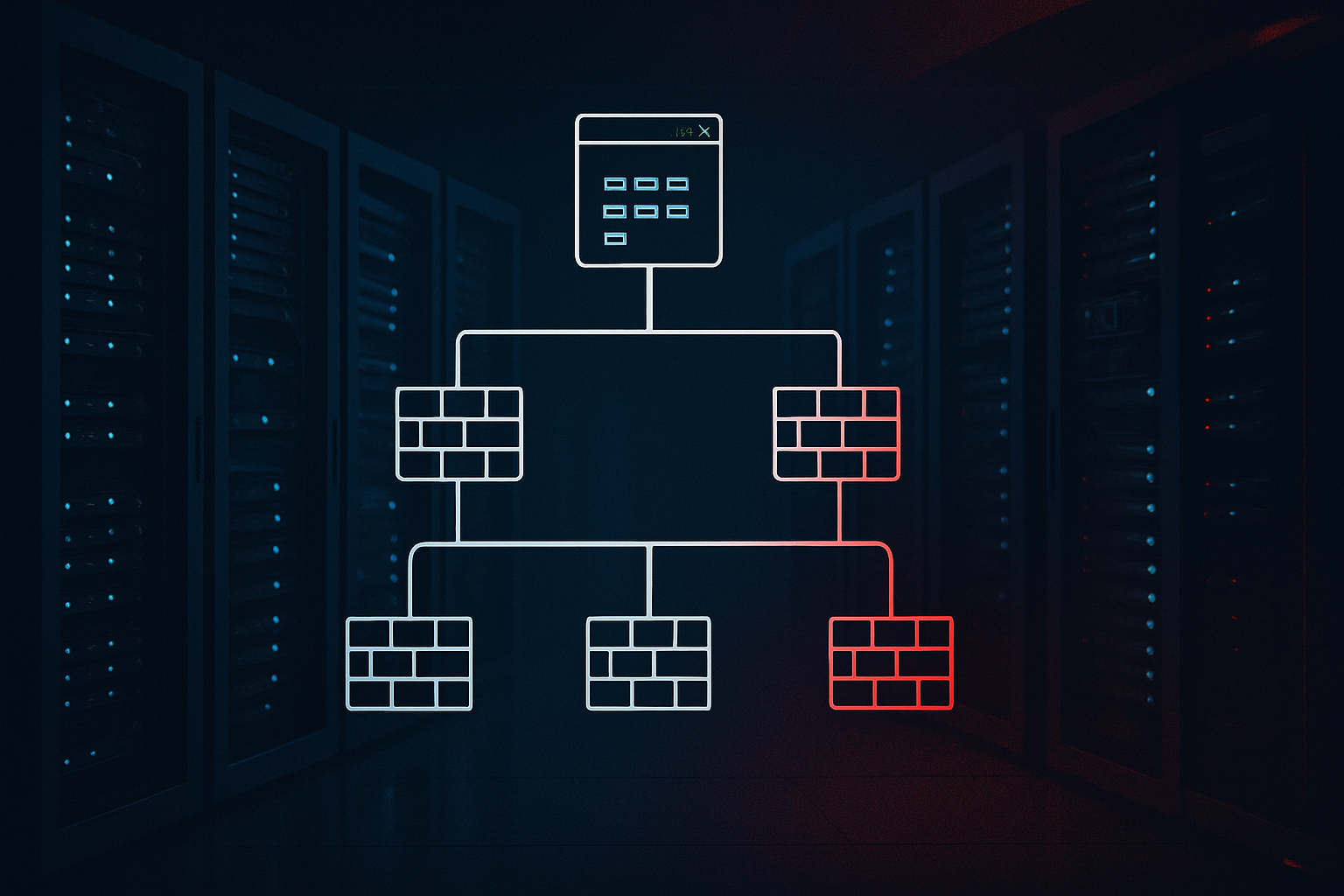
When a vulnerability exists in the software that controls your firewall policies, the blast radius extends far beyond a single server. Check Point's disclosure of a zero-day in its Security Management Server—exploited in targeted attacks throughout July before a patch arrived in late September—illustrates a pattern that infrastructure operators cannot ignore: management and orchestration layers have become high-value targets precisely because they sit at the nexus of network control.
The Anatomy of Management Server Risk
CVE-2026-93616 allowed attackers to execute arbitrary scripts on the management server without authentication, provided they could reach its web service interface. This is not a privilege escalation within an authenticated session; it is unauthenticated remote code execution on the system responsible for distributing firewall rules across your entire infrastructure.
The attack surface here is deceptively simple: if your management server's web service is reachable—whether from the internet or from a compromised internal host—an attacker gains a foothold in the decision-making layer of your network. From there, firewall policies can be modified, disabled, or exfiltrated. Rules that should block malicious traffic can be silently rewritten. A management server compromise is not just a single system breach; it is a cascading failure across every device managed by that server.
Check Point's own release timeline underscores the gap between discovery and remediation. The vulnerability was exploited on 23 July, but the patch did not ship until 22 September—nearly two months of exposure for organisations still running unpatched instances.
Why Management Layers Are Attractive to Attackers
Management and orchestration systems occupy a privileged position in modern infrastructure. They are typically fewer in number than the devices they control, they centralise configuration data, and they often enjoy network access that individual servers and appliances do not. An attacker who compromises a management server has effectively obtained a skeleton key to the infrastructure it manages.
This is particularly acute in larger deployments where a single management instance oversees dozens or hundreds of firewalls, switches, and access points. The operational convenience that drives centralised management—one pane of glass, consistent policy enforcement, simplified auditing—creates a single point of failure that sophisticated attackers are motivated to target.
The fact that this vulnerability was zero-day and remained unpatched for two months means organisations running Check Point infrastructure were operating blind. Defenders could not simply enable a WAF rule or network segmentation rule to block exploitation attempts, because they did not know the attack existed or what it looked like.
Operational Hardening Against Management Server Compromise
Patching is necessary but not sufficient. Infrastructure operators should treat management servers as critical assets that require the same rigour applied to perimeter defence.
Network segregation is foundational. Management servers should be accessible only from specific administrative networks or jump hosts, never from the general internet or untrusted internal subnets. If your Check Point management server's web interface is reachable from any workstation or from any untrusted VLAN, the exposure window for the next zero-day becomes your window of risk.
Monitoring is equally important. Management server logs should be forwarded to a dedicated SIEM or log aggregation system and reviewed for unusual API calls, policy changes, script executions, or failed authentication attempts. Many organisations monitor the devices managed by the system far more closely than the management system itself—a blind spot that attackers routinely exploit.
Credential rotation and access controls within the management interface should also be audited. If the management server stores credentials for downstream devices, those credentials should be rotated on a regular schedule and should never be reused across unrelated infrastructure.
The Broader Pattern
Check Point is not unique in this respect. Vulnerabilities in management and orchestration systems for Kubernetes, Terraform, Ansible, and other infrastructure-as-code platforms have become increasingly common. Each represents an opportunity for attackers to move from a single compromised host to wholesale control of large infrastructure footprints.
Organisations that treat management servers as peripheral infrastructure—updated infrequently, monitored lightly, positioned without network segmentation—are accepting a level of risk that no perimeter defence can fully mitigate. A zero-day in a management system does not announce itself. The only reliable defence is layered: patch aggressively, segregate networks ruthlessly, and monitor relentlessly.