Kubernetes operators relying on Argo CD for continuous deployment face a significant threat. Researchers at Synacktiv have disclosed an unauthenticated remote code execution vulnerability in the repo-server component that can result in complete cluster takeover, with no patch currently available and no CVE assigned.
The Attack Surface
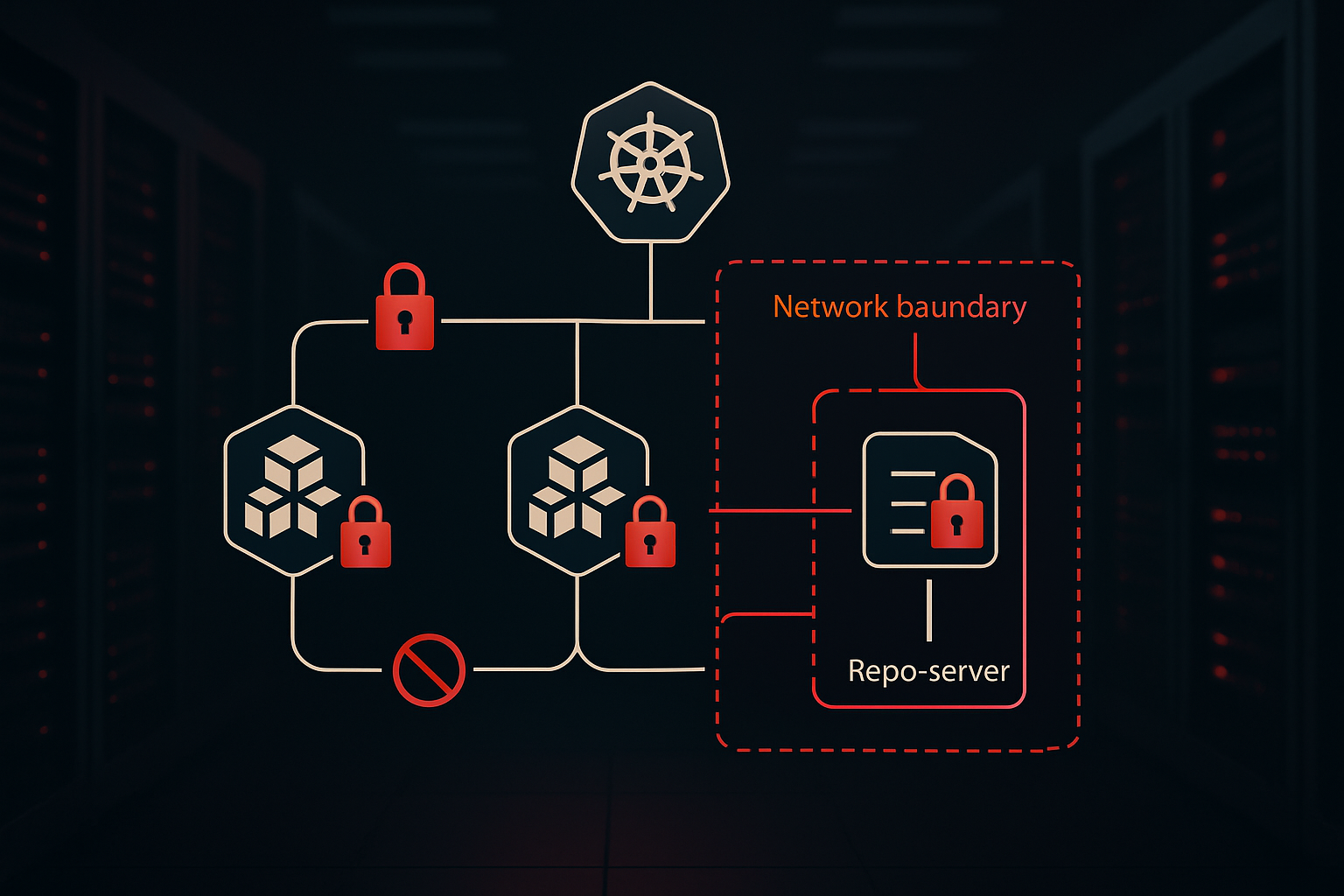
Argo CD's repo-server is responsible for cloning and managing Git repositories used in deployment pipelines. The flaw exists in how the component handles requests, permitting an attacker with network access to the internal repo-server port to execute arbitrary code without authentication. The critical detail here is "network access" — the repo-server typically listens on an internal interface, but misconfiguration, lateral movement, or compromised adjacent services can expose this attack vector.
What makes this particularly concerning for infrastructure teams is that successful exploitation leads to direct access to the Kubernetes cluster itself. Since Argo CD runs with cluster-admin privileges in most deployments, an attacker gaining code execution on the repo-server can immediately assume those same privileges, effectively owning the cluster and everything running within it.
Timing and Disclosure Status
Synacktiv reported the flaw to Argo CD's maintainers, but as of now, no patch has been released and the vulnerability remains unassigned a CVE identifier. This creates a window where the issue is known to security researchers but not yet publicly detailed in standardised vulnerability databases. Organisations operating Argo CD should treat this as a high-priority risk regardless of CVE status — patch availability is the bottleneck, not classification.
Mitigation Without a Patch
Until the Argo CD project releases a fix, several defensive measures can reduce exposure. First, ensure the repo-server is never directly accessible from untrusted networks. Implement strict network segmentation so the component communicates only with other cluster components that require it. If your infrastructure allows, run Argo CD in an isolated namespace with minimal RBAC permissions — though this is difficult when the application is designed for broad cluster access.
Monitor for unusual outbound connections or Git credential usage from the repo-server pod. Anomalous activity attempting to enumerate cluster resources or modify deployments should trigger immediate investigation. Additionally, keep your Argo CD version inventory current; when a patch does land, prioritise rollout to production clusters immediately.
For organisations deploying Kubernetes across multiple datacenters or hybrid infrastructure, the repo-server's criticality means it should be treated as a tier-one security component. Some teams may choose to temporarily disable Argo CD's automatic sync features and rely on manual deployments or alternative GitOps tools until a patch is available — a conservative but justifiable approach for high-stakes environments.
Broader Implications for GitOps Deployments
This vulnerability underscores a recurring pattern in Kubernetes tooling: components handling Git access, cluster credentials, or deployment logic are inherently high-value targets. When an unauthenticated code-execution flaw exists in such a component, the blast radius extends to the entire cluster. Teams should audit their GitOps stack regularly, not just for known CVEs but for architectural assumptions about network isolation and authentication boundaries.
The lack of a CVE and active patch creates ambiguity in incident response workflows. Organisations should begin threat modelling around this flaw now — document which clusters run Argo CD, map their network topology, and establish rollback procedures in case exploitation is suspected. Details from Synacktiv's research should inform your risk assessment as they become publicly available.
Until the Argo CD maintainers release a patch, this is a known-vulnerability situation requiring proactive network isolation and continuous monitoring. Treat it as a critical infrastructure risk, not a backlog item.