The Delhi High Court's recent order targeting pirate streaming domains reveals a pattern that infrastructure operators and registrars should understand: content thieves rely on registration loopholes, domain manipulation, and gaps in enforcement workflows.
The Domain Mutation Problem
PlayIMDb and its related services exemplify a low-friction piracy model. Rather than hosting content directly, these domains act as URL transformers—taking a legitimate IMDb link and inserting 'play' or modifying the path to redirect users to pirated streams. The technical elegance is minimal; the business advantage is real. Each variant can operate under a separate domain registration, forcing rights holders to pursue takedowns one domain at a time.
This approach sidesteps direct copyright liability by avoiding direct streaming or storage. Instead, the site simply redirects—a practice that creates ambiguity for both registrars and ISPs. Is a redirect service a hosting provider, a search engine, or a facilitator. That ambiguity delays enforcement.
Registrar and ISP Enforcement Gaps
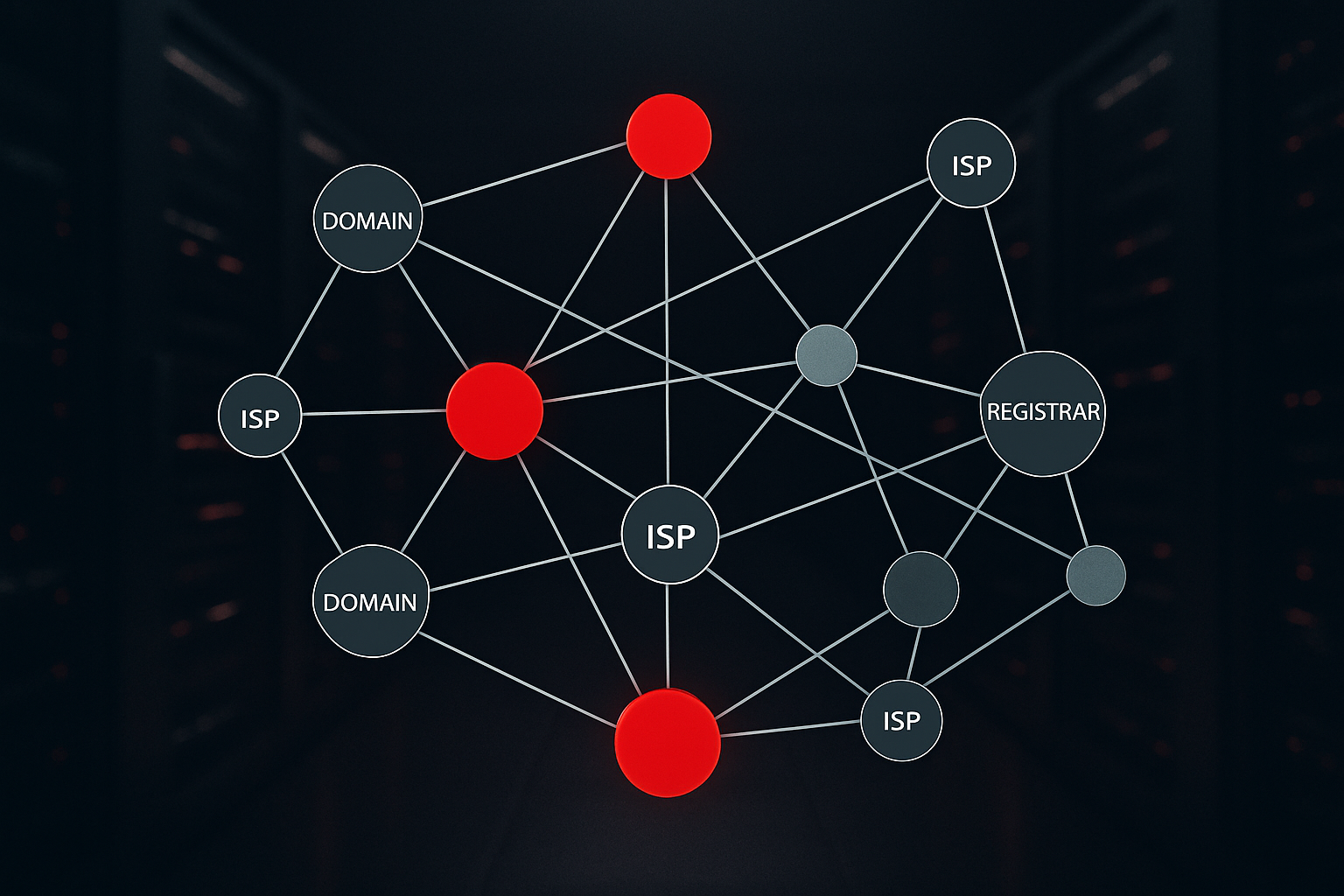
The court order, as reported by TorrentFreak, required registrars to disable domains and ISPs to block access. In practice, this reveals a fragmented enforcement landscape. Registrars in low-regulation jurisdictions may not prioritize takedown notices, or may process them slowly. ISPs, meanwhile, face technical and cost barriers: DNS blocking can be circumvented with VPNs or alternate resolvers, and blocking infrastructure requires coordination across multiple network operators.
For a site operator, the calculation is straightforward. Domain registration costs are trivial—often under ten dollars per year. If a domain survives for three months before registrar action, and generates revenue through ads or referrals, the business model works. Legal pressure must exceed operational cost and time-to-revenue for blocking to be effective.
The presence of 'vidsrc' and 'moviesapi' in the same order is telling. These are embed services—third-party scripts and iframes that hosts and streaming sites can drop into their own infrastructure. They function as middleware, sitting between the pirate site's frontend and the actual video source. This layering adds another enforcement barrier: the embed provider claims they host no content, the site owner claims they merely embedded a third-party player, and the content source is obscured behind multiple redirects.
What Hosting Infrastructure Operators Face
For legitimate hosting providers and datacenter operators, rulings like this expose operational risk. Courts are increasingly willing to order ISP-level blocking, which assumes ISPs have efficient mechanisms to identify and filter traffic. In reality, ISPs typically rely on DNS blocking, which is fragile, or BGP null-routing, which is blunt and can affect unrelated services.
Hosting providers also face indirect pressure. A datacenter that hosts a pirate streaming site—either knowingly or through compromised legal process—may itself face regulatory scrutiny or payment processor sanctions. Transparency in terms of service, clear DMCA takedown procedures, and documented legal review of high-risk tenants have become practical necessities, not just legal formalities.
Additionally, the ruling highlights why jurisdiction matters. Indian courts have broad authority over ISPs and registrars within their borders, but enforcement across borders depends on cooperation from foreign registries and hosting providers. A domain registered in one country and hosted in another may require coordination across three or more legal systems. That complexity is a feature for pirates and a cost burden for rights holders.
The Limitations of Domain Takedowns
Despite the court order, pirate streaming will not stop. The sites targeted will likely reappear under new domains within weeks. The real impact is on scale and operational friction. Each takedown round forces pirates to rebuild infrastructure, update DNS, and redirect users. Over time, this raises their operational cost and technical expertise threshold, which may shift some marginal operators toward legitimate services.
From an infrastructure perspective, the takedown model assumes that blocking at the domain level is a primary attack surface. In reality, modern pirate services are increasingly moving toward peer-to-peer distribution, residential proxy networks, and encrypted protocols that make ISP-level blocking ineffective. A persistent piracy problem likely requires action above the hosting layer—at payment processors, advertising networks, and content delivery partners—where central chokepoints exist.
The Delhi ruling is sound law enforcement within its scope, but it illustrates why domain blocking alone has never solved piracy. Registrars and ISPs will process these orders dutifully. The sites will shift. And the underlying economics of content theft will persist until the revenue streams themselves are disrupted.