When vulnerability disclosures hit the public record, there's a window before patches are deployed and defences tighten. That window has shrunk. A recent authentication bypass in PraisonAI, an open-source multi-agent orchestration framework, saw active exploitation attempts within four hours of disclosure. The speed underscores a harder reality: missing authentication controls in production-facing services can be weaponised almost immediately.
The Vulnerability Profile
CVE-2026-44338 is straightforward in its construction but severe in its consequence: PraisonAI exposed sensitive endpoints without requiring authentication. The CVSS score of 7.3 reflects the practical risk: an unauthenticated attacker can invoke functionality that should be restricted. In a framework designed to orchestrate multi-agent workflows—typically involving API calls, data access, and potentially external system interaction—missing auth isn't an annoyance. It's an open door.
The four-hour window between disclosure and observed exploitation attempts suggests neither coincidence nor sophisticated reconnaissance. Automated vulnerability scanning and mass-scale probing likely identified vulnerable instances within minutes. The speed implies attackers are either running persistent scans against public instances or possess intelligence suggesting where PraisonAI might be deployed.
Why Open-Source Orchestration Frameworks Are High-Value Targets
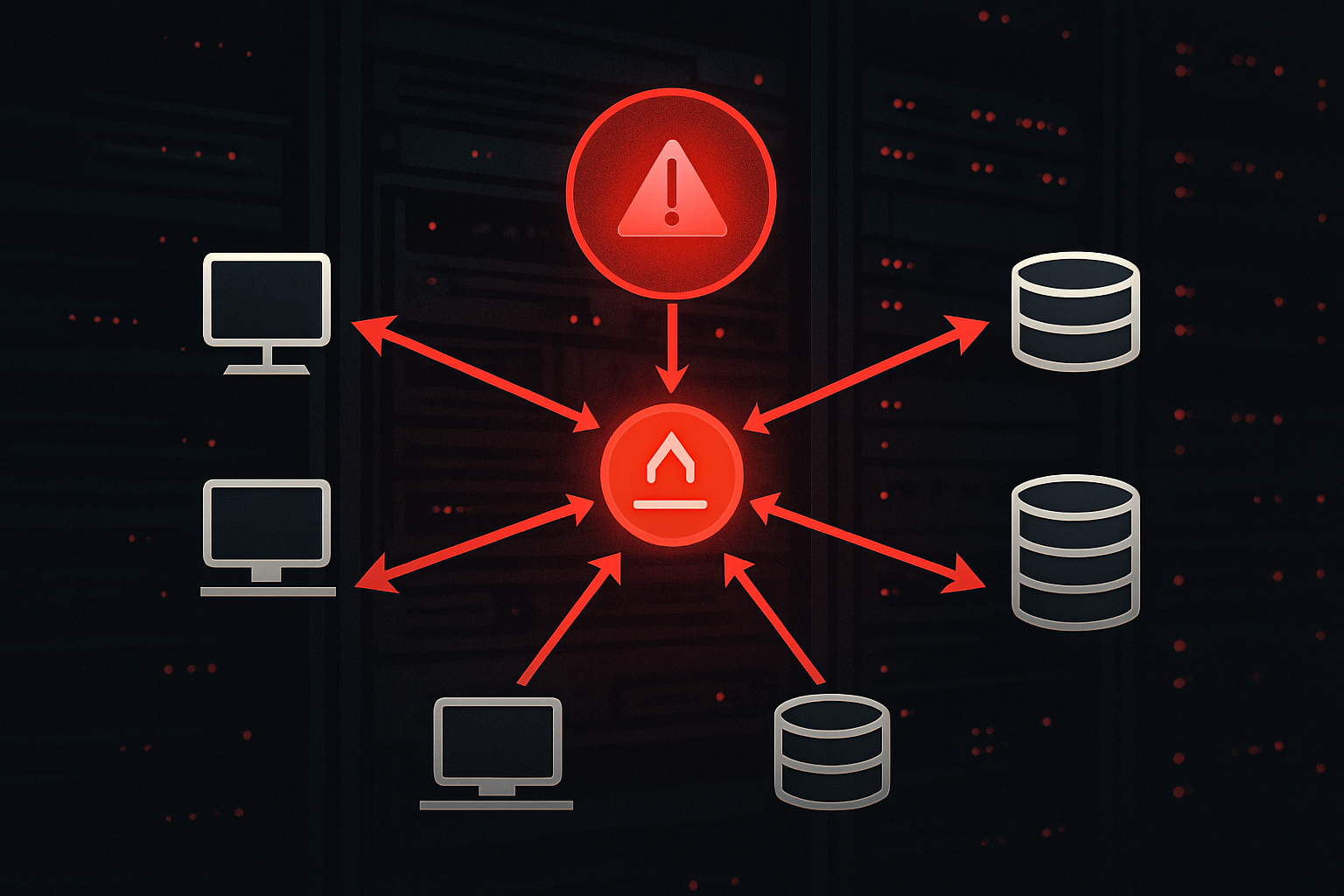
Multi-agent orchestration frameworks occupy a critical position in modern infrastructure. They're often deployed internally to coordinate services, handle batch processing, or manage AI workflows. In many cases, they sit on internal networks or behind simple firewall rules but remain accessible from the internet. They're designed to invoke other systems, which means a compromised orchestrator becomes a lateral movement pivot point.
PraisonAI specifically is designed to coordinate multiple AI agents performing tasks in sequence or parallel. An attacker who can invoke arbitrary workflows without authentication might execute unintended operations, exfiltrate data flowing through those workflows, or chain compromises across dependent services. The framework's purpose—integration and orchestration—makes it particularly dangerous when authentication is absent.
The Disclosure-to-Exploitation Timeline Problem
Four hours represents the practical reality of modern exploit timelines. Security teams typically follow responsible disclosure practices: a patch is released alongside the CVE, and operators have a grace period before weaponisation becomes widespread. But that grace period is now measured in hours, not days. Monitoring tools, threat feeds, and automated scanners trigger within minutes. Exploit code or PoC may appear within the first hour.
For operators running open-source frameworks in production environments, this means passive monitoring is insufficient. The moment a CVE lands, three things must happen in parallel: patch availability must be confirmed (or a workaround identified), affected instances must be located (through inventory or network scanning), and deployment must begin immediately. Organisations without clear asset discovery, rapid patch testing, and deployment automation will find themselves in the exploitation window.
Hardening Against Missing Authentication
Until patches are available, several practical steps reduce exposure. First, assume authentication controls in open-source frameworks are a deployment responsibility, not a guarantee. Network segmentation—restricting access to the orchestration framework to only authorised callers—should be enforced at the firewall or reverse proxy layer. If the framework doesn't require authentication internally, the network boundary must enforce it.
Second, monitor for suspicious API calls or unusual agent invocations. Audit logs should capture what workflows were executed, when, and by whom (even if the framework doesn't authenticate users internally, you can still log the source IP and request headers). Third, run the framework in environments where it cannot directly access external systems or databases without additional authorisation checks. Orchestration is powerful; isolation is essential.
For teams deploying multi-agent systems or orchestration frameworks, the lesson is clear: treat authentication as a deployment-layer concern if the framework doesn't provide it natively. That responsibility doesn't disappear because the software is open-source. If anything, it becomes more urgent, since threat actors will probe extensively for such gaps.