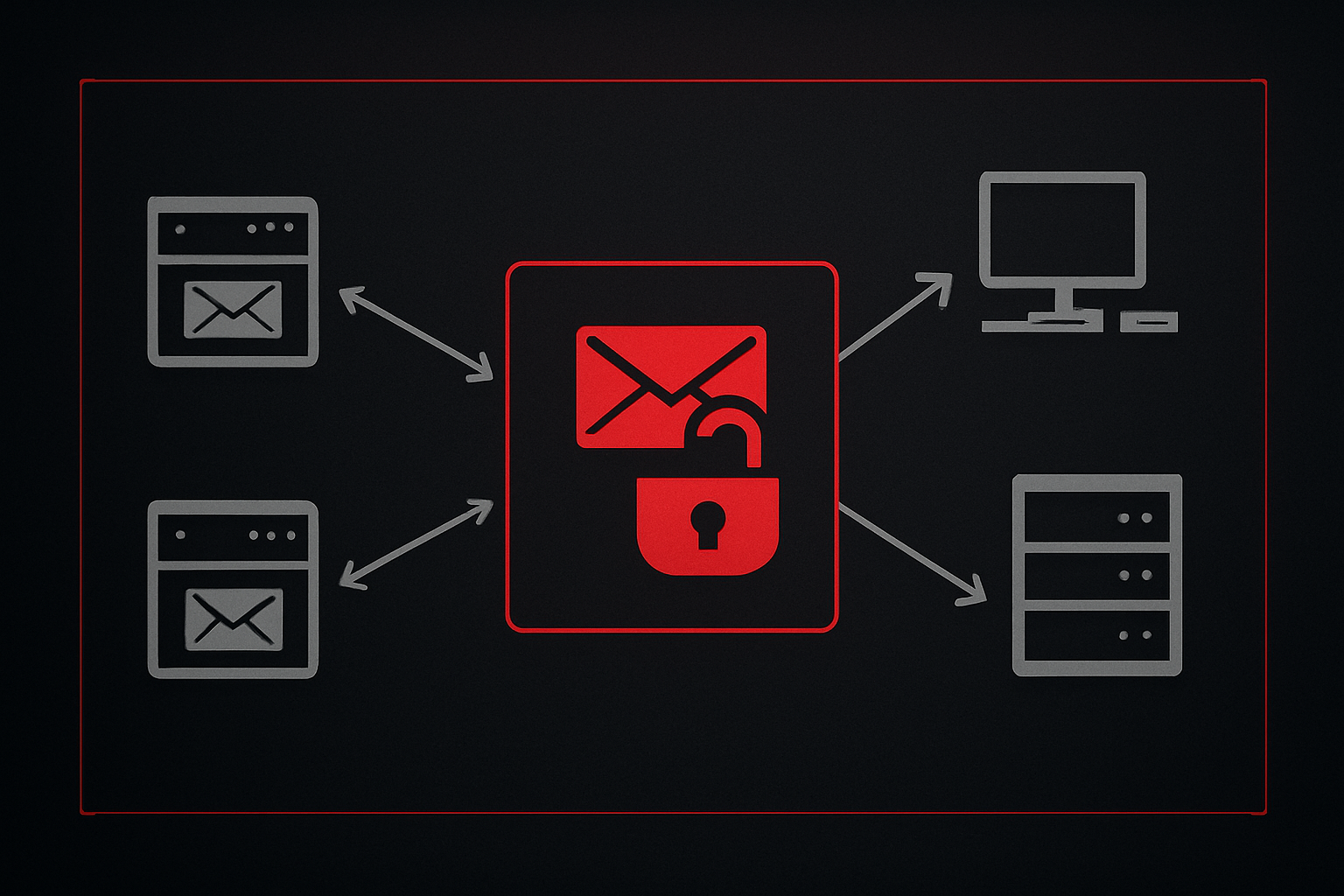
Email gateway appliances sit at a critical chokepoint in most organizations' infrastructure. They filter inbound and outbound traffic, enforce security policies, and often hold encryption keys. When a vulnerability in these devices emerges—particularly one allowing unauthenticated remote code execution—the implications extend well beyond email security into the broader hosting and infrastructure ecosystem.
The Anatomy of the Cisco Email Gateway Flaw
Cisco's recent advisory details a vulnerability in its Secure Email Gateway that permits an attacker to write arbitrary files to the appliance's operating system without any form of authentication. The attack vector is elegant in its simplicity: a specially crafted email attachment, sent through the gateway itself, triggers the flaw. If successful, the attacker gains command execution at root level—the highest privilege on the system.
This type of vulnerability is particularly dangerous because it requires no insider knowledge, no credential compromise, and no social engineering. Any attacker with basic email capabilities can attempt exploitation. The attack surface is also enormous: any email address pointing at an organization using a vulnerable gateway becomes a potential attack vector.
Why Email Gateways Matter in Infrastructure Security
Email gateways are often viewed as perimeter devices—important, but secondary to firewalls or web application firewalls. This perception can lead to delayed patching and lower prioritization in update cycles. In reality, a compromised email gateway grants attackers direct access to:
- Email archives and historical communications
- Encryption keys used for TLS interception and decryption
- Configuration data, including LDAP and authentication server credentials
- Internal network topology and DNS information
- A legitimate staging point for lateral movement into internal systems
For organizations running their own email infrastructure, or for hosting and managed service providers offering email filtering as part of their service, a single unpatched gateway can become the pivot point for a full network compromise.
Active Exploitation and Timeline Pressure
Cisco's advisory notes that attacks are already occurring in the wild, which means the clock is ticking for patching. Organizations cannot afford the luxury of lengthy testing cycles before deployment. The presence of proof-of-concept code, whether public or private, means attackers are actively scanning for vulnerable instances.
Infrastructure teams should treat this with the same urgency as a BGP hijack or a datacenter-level incident. The difference is that email gateways often live in managed environments where updating firmware requires coordination with vendors, scheduled maintenance windows, and—in some cases—temporary service degradation during patching.
Detection and Response Considerations
For organizations unable to patch immediately, several interim steps reduce risk. Log analysis for unusual file creation on the gateway appliance, particularly in system directories, can reveal exploitation attempts. Network segmentation that limits the gateway's ability to communicate with internal systems reduces blast radius if compromise does occur. Monitoring outbound connections from the gateway to external IP addresses can flag command-and-control activity.
Forensic inspection of gateway logs may reveal little; a sophisticated attacker might strip audit trails as part of initial access. This makes preventive patching far more cost-effective than reactive investigation.
Infrastructure operators managing email services—whether as hosting providers, managed service operators, or internal IT teams—should review their update procedures for email appliances. Treating them with the same urgency as firewall or core network device updates is justified. A compromised email gateway is not merely a mail filtering problem; it is a potential takeover of significant portions of an organization's internal network.