Last year's Operation Offsides, a coordinated enforcement action targeting pirate streaming sites during the FIFA World Cup, removed more than 1,000 domains from circulation. It was a show of force: coordinated across multiple jurisdictions, visible, and widely reported. Yet within weeks, the same content reappeared under new domains, hosted in different regions, often served via infrastructure designed specifically to withstand takedown notices. The crackdown illustrated a fundamental problem with how copyright enforcement currently operates at the DNS layer.
The Domain Seizure Treadmill
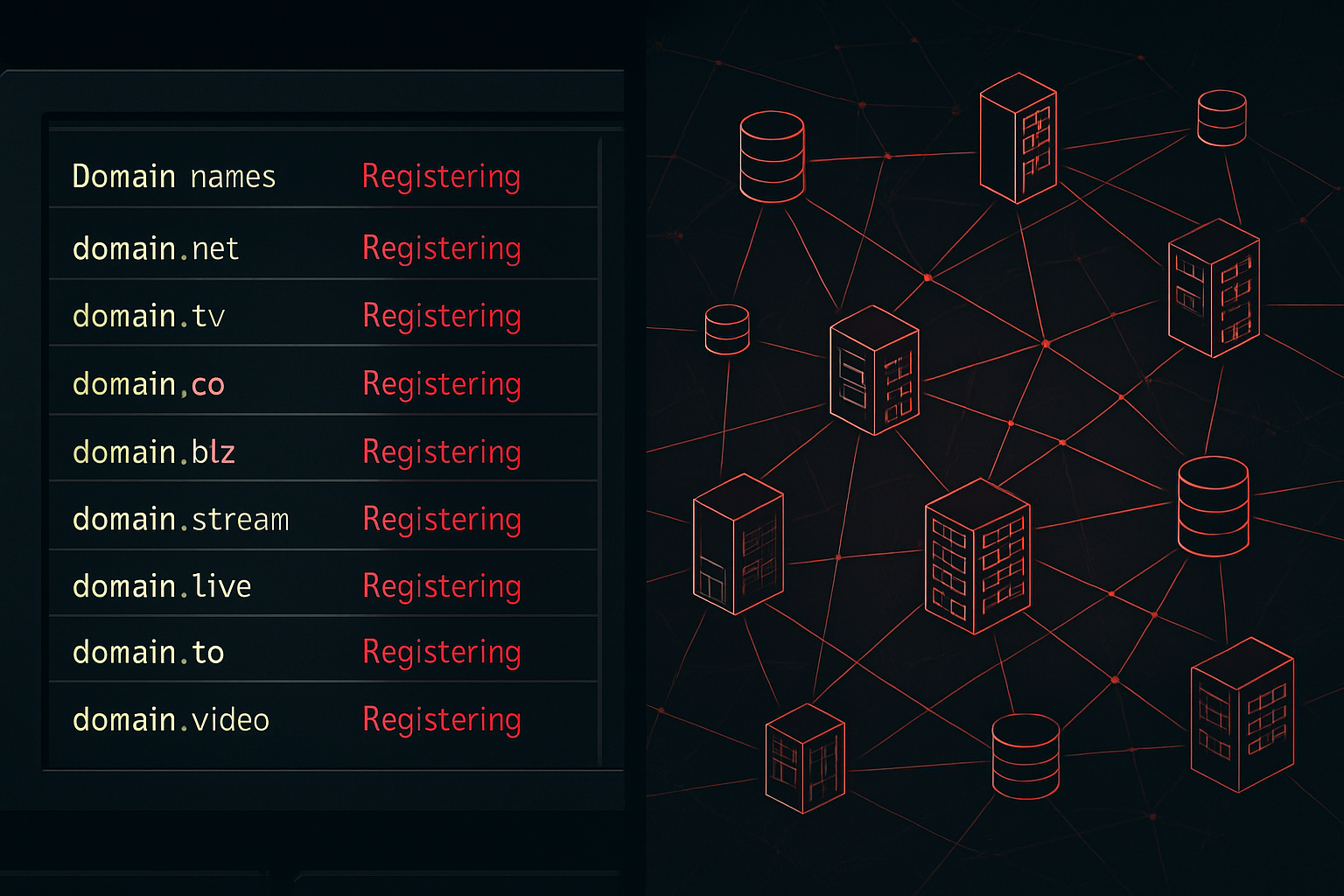
Domain seizure works like a game of whack-a-mole. An operator registers a domain, builds an audience, and when enforcement comes—sometimes months later—the domain disappears. But the infrastructure underneath remains: payment processors continue to function, upstream bandwidth is available, and registrars in permissive jurisdictions accept new applications within hours. A pirate streaming operation can register 20 new domains in a single afternoon across multiple registries, each one a clean slate from an enforcement standpoint.
What makes this cycle so difficult to disrupt is that domain registration itself is commoditised. The cost of a new domain registration is trivial compared to the revenue from streaming ads or subscription fees. Enforcement agencies must identify, seize, and publicise each domain removal—a labour-intensive, case-by-case process. Operators simply automate their registration workflow and move forward.
The real problem is jurisdictional fragmentation. Some registries cooperate readily with takedown orders; others require formal legal process; a few operate in jurisdictions where copyright enforcement is not a priority. A pirate operator can easily route domain registrations through a mix of compliant and non-compliant registrars, ensuring continuity of service even when partial seizures occur.
Why Site Blocking Faces Its Own Bottlenecks
In response to the limits of domain seizure, enforcement bodies have begun advocating for more aggressive measures—particularly site blocking at the ISP level. The MPA and IPR Center have pushed for U.S. legislation that would enable ISPs to block access to known piracy sites, similar to regimes already in place in the UK and some European countries.
But site blocking introduces different technical and operational problems. It requires real-time coordination between law enforcement, copyright holders, and hundreds of independent ISPs. It must scale to handle thousands of domains (which regenerate constantly). And it creates a new attack surface: operators can use DNS-over-HTTPS, VPN services, or simply instruct users to change their resolver to bypass ISP-level blocks entirely. Many users already do this for privacy reasons unrelated to piracy.
There's also a jurisdictional mismatch. A site blocking order issued in the United States has no force in Southeast Asia, where much pirate infrastructure is actually hosted. An ISP in Vietnam or a registrar in Montenegro operates outside the reach of U.S. courts. Enforcement becomes a game of blocking the last-mile access in regulated territories whilst the underlying infrastructure remains untouched.
Infrastructure as the Bottleneck
The real issue is simpler than policy: pirate streaming infrastructure relies on the same public internet as everything else. A pirate operator needs bandwidth, payment processing, DNS resolution, and domain registration—all commoditised services available from dozens of providers worldwide. Current enforcement targets the domain name or the final website, but leaves the upstream infrastructure intact.
Effective enforcement would need to address upstream chokepoints: the hosting providers, the content delivery networks, the payment processors, and the DNS recursive resolvers that actually resolve pirate domains. This is considerably harder than seizing a domain name, because it requires identifying and pressuring infrastructure operators to audit their customer base and terminate service to known pirates.
Some infrastructure providers do this already—either voluntarily or under legal pressure. But others, particularly those operating in jurisdictions with weak IP enforcement or those specialising in privacy and offshore services, have little incentive to cooperate. An operator seeking to host pirate content can select providers known to be permissive or jurisdiction-shopping across multiple infrastructure tiers.
The Longer View
Neither domain seizures nor ISP-level site blocking will substantially reduce piracy access so long as the underlying infrastructure remains available and geographically fragmented. Enforcement works best when the cost of compliance is lower than the cost of evasion. Right now, for pirate operators, evasion is cheap.
More sustainable approaches would require either a significant increase in enforcement coordination across jurisdictions (impractical) or changes to the economics of piracy itself—making legal streaming more accessible, cheaper, and faster than pirated alternatives. Infrastructure-level enforcement will always be a game of catch-up, because the infrastructure itself is too distributed and too easy to replicate.
The limits exposed by Operation Offsides are not new, but they are becoming harder to ignore. Seizures will continue, and new site blocking laws may follow. Yet without addressing the upstream infrastructure choices that make piracy viable, enforcement remains a costly and temporary intervention rather than a solution.