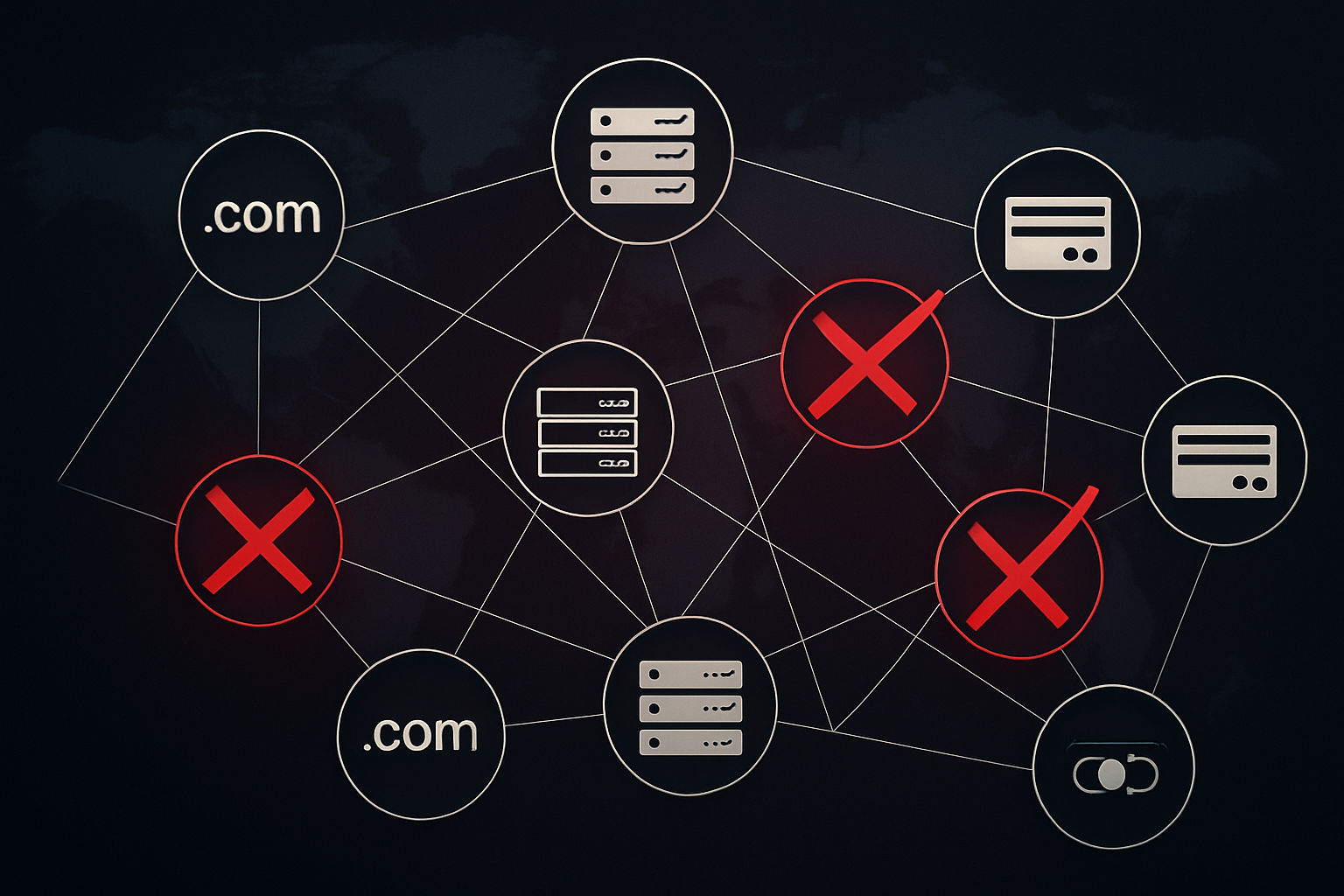
The FIFA World Cup prompted what law enforcement agencies claim was the most coordinated anti-piracy operation ever staged around a sporting event. Authorities across multiple jurisdictions seized or blocked over a thousand domains, arrested suspects, and dismantled advertising networks—an effort spanning Operation Offsides and Operación Tarjeta Roja. For hosting providers, domain registrars, and infrastructure operators, this campaign offers a clear case study in how legal pressure reshapes the landscape of content distribution.
The Scale and Scope of Enforcement
Targeting sporting events is not new, but the breadth of this operation suggests a shift in enforcement strategy. Rather than focusing solely on major piracy platforms, authorities coordinated with internet service providers, payment processors, and hosting companies to identify and disable thousands of smaller streaming sites operating across disparate jurisdictions. The tactic relied on rapid domain registrar notifications, DNS blocking at the ISP level, and freezing of advertising accounts that monetised the pirate streams.
This decentralised approach is more difficult to circumvent than takedowns of centralised services. A single large streaming platform can be rebuilt; a coordinated strike against its distributed infrastructure—domains, hosting providers, payment channels—creates friction that costs operators time and money to reconstitute.
Domain Registration and Hosting Provider Responsibilities
The operation highlighted the critical role that registrars and hosting providers play as the first line of enforcement. Many domains were suspended within hours of law enforcement notification, suggesting that registrars responded swiftly to abuse reports and legal orders. Payment processors also cut off advertising networks that funnelled revenue to pirate sites, removing financial incentive.
For operators of legitimate services, this underscores the importance of clear terms of service, abuse reporting procedures, and rapid response mechanisms. Registrars and hosters that lack transparent policies or slow response times face regulatory and legal pressure—and potential liability. Conversely, those with well-documented abuse handling processes and strong cooperation with law enforcement reduce their own legal exposure.
Offshore hosting providers face particular scrutiny in such campaigns. Even jurisdictions known for a permissive stance on copyright and content policy maintain agreements with international law enforcement bodies and payment networks. Domain registries, in particular, operate under ICANN governance, which mandates cooperation with valid legal requests regardless of where the registrar is physically located.
The Advertising Revenue Choke Point
A notable aspect of this enforcement was the targeting of ad networks and payment flows. Pirate streaming generates revenue primarily through advertising and sometimes affiliate schemes. By cutting off advertising accounts and payment channels, authorities disrupted the economic model that makes piracy sustainable. This is often more effective than site-specific takedowns, which can be circumvented through rapid redeployment.
Payment processors—whether traditional credit card networks or cryptocurrency exchanges—increasingly face legal requirements to screen for illicit activity. Operators of services at legal risk should anticipate that major payment channels will be unavailable and plan accordingly for legitimate use cases. For truly offshore or privacy-focused operations, this also explains the industry shift toward cryptocurrency payments and decentralised settlement mechanisms.
Implications for Infrastructure Operators
The World Cup enforcement wave sends a clear message: coordinated, cross-border takedowns are now routine during high-profile events. Hosting companies and registrars should expect that sporting events, major film releases, and other high-value content drops will trigger enforcement campaigns.
Operators who wish to maintain a good-faith stance on intellectual property should ensure their abuse reporting channels are monitored and that legal requests receive swift, documented responses. Those who operate under a more permissive policy—or who deliberately avoid US and EU jurisdiction—should be aware that international law enforcement and payment networks have extended their reach significantly. Even providers marketing privacy or copyright-indifferent hosting cannot assume immunity from pressure on payment processing or domain registration, as these are choke points that cross all jurisdictions.
The technical ability to host and distribute content is no longer the limiting factor in piracy; the business infrastructure—domains, payment channels, advertising networks—has become the constraint. Understanding this shift is essential for any operator planning the compliance posture of their service.