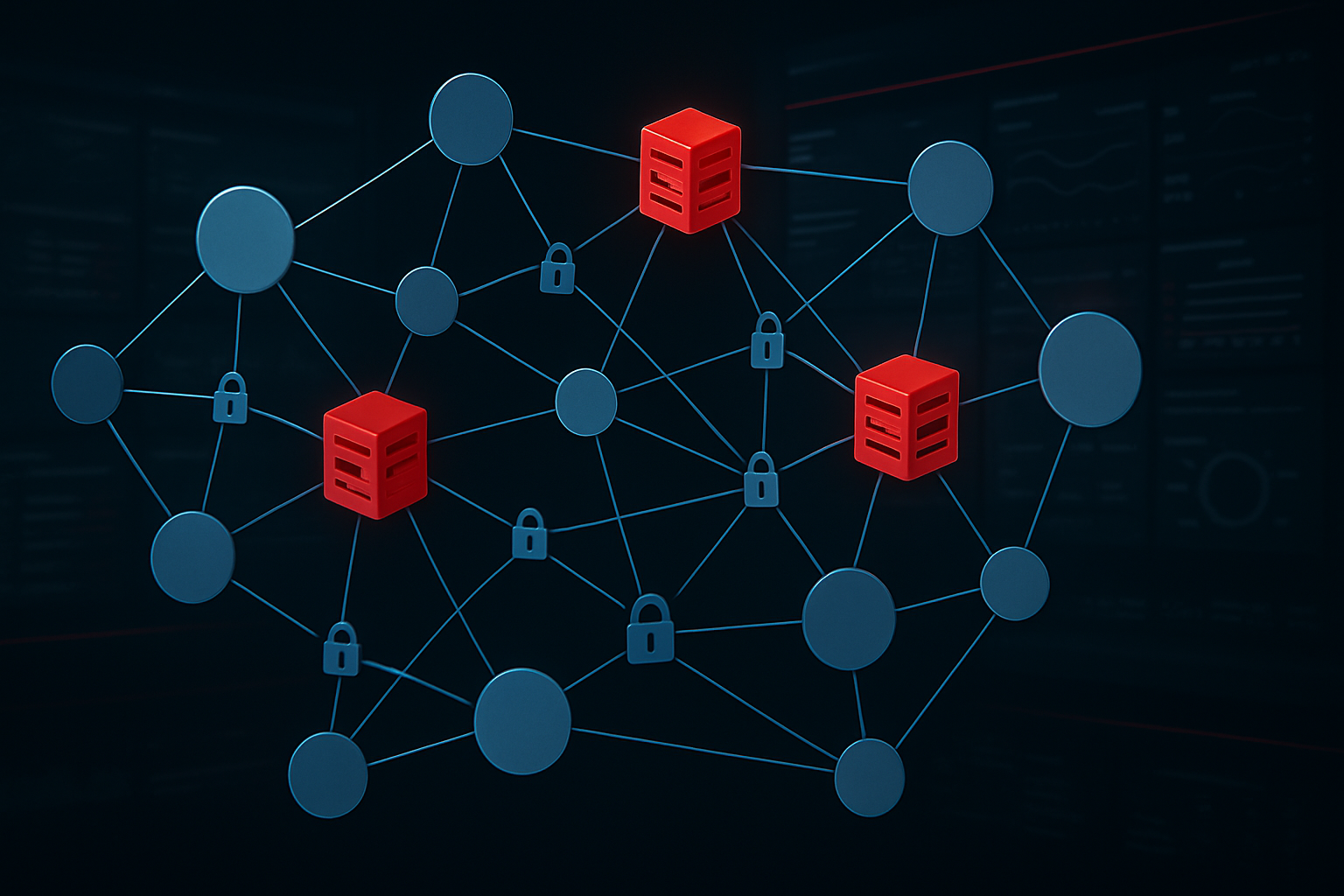
When state-sponsored threat actors develop custom command-and-control infrastructure, they typically optimise for operational security and evasion rather than raw capability. The recently documented Cavern C2 framework—attributed to Iranian state intelligence operations—demonstrates this approach through its modular design philosophy.
Modular Architecture as an Operational Pattern
Cavern's modular construction isn't incidental; it reflects a deliberate strategy for compartmentalising operational risk. Rather than embedding all malicious functionality into a monolithic agent, modular C2 systems load capabilities on demand, reducing the forensic footprint on compromised hosts and complicating detection efforts.
This design choice mirrors patterns seen in other state-sponsored infrastructure. By separating command logic from execution modules, operators can update individual components without redeploying entire toolkits. If a detection signature emerges for one module, the framework's other components remain viable. The approach also allows operators to customise payloads per target environment—a critical consideration when targeting mixed IT stacks across government and private sector organisations.
Implications for Infrastructure Defenders
For hosting providers and infrastructure teams, modular C2 frameworks present distinct detection challenges. Traditional signature-based approaches often fail because malicious behaviour is distributed across multiple files and execution contexts. A web server might never execute the malicious binary directly; instead, a legitimate process loads and executes memory-resident payloads, leaving minimal forensic evidence on disk.
Network-level detection becomes correspondingly important. Cavern, like most state-sponsored C2 systems, requires reliable command channels to the attacker's control infrastructure. Operators typically prioritise stealth—using encrypted protocols, mimicking legitimate traffic patterns, and rotating C2 endpoints to evade network intrusion detection systems. However, the command-and-control itself must communicate with attacker-controlled servers, creating an exploitable asymmetry. Defenders who can identify patterns in encrypted traffic—timing, payload sizes, or protocol anomalies—gain meaningful visibility even when the underlying commands remain opaque.
Targeting Patterns and Attack Surface
The focus on IT service providers as initial targets reflects a rational attacker strategy: compromise the intermediary, gain access to the customer base. IT providers manage infrastructure for multiple government agencies and commercial entities, making them high-value objectives. A single successful intrusion can yield cascading access across dozens of downstream organisations.
This targeting pattern should inform defensive prioritisation. IT infrastructure providers face asymmetrical risk—their own security posture directly affects customer security. Implementing strict segmentation between customer environments, enforcing multi-factor authentication on administrative interfaces, and maintaining detailed audit logging becomes not just best practice but operational necessity.
Detection and Response Strategy
Detecting modular C2 activity requires moving beyond single-vector detection. Effective strategies combine multiple sensors: endpoint telemetry monitoring unusual process chains and memory allocations, network detection looking for suspicious encrypted flows to unexpected destinations, and log analysis tracking administrative access patterns and lateral movement.
Particular attention should focus on legitimate system utilities being abused to load and execute malicious payloads—a technique well-established in state-sponsored tradecraft. Analysis of Cavern's operational activity shows consistent reliance on these living-off-the-land techniques, making behaviour-based detection more valuable than binary analysis alone.
Incident response teams should assume that modular C2 infrastructure indicates a resourced, persistent threat. Single-stage remediation often fails; these operations typically include backup access mechanisms and multiple persistence techniques. Thorough threat hunting across network logs, endpoint telemetry, and authentication records is essential to understand the full scope of compromise before rebuilding systems.
Closing Perspective
Cavern represents evolution in state-sponsored attack infrastructure, not revolution. The modular approach and operational tradecraft reflect lessons learned from previous detection successes. For infrastructure teams, the relevant takeaway is straightforward: detect modular C2 activity through behaviour and network analysis, assume persistence across multiple vectors, and plan incident response assuming resourced adversaries with sustained access.