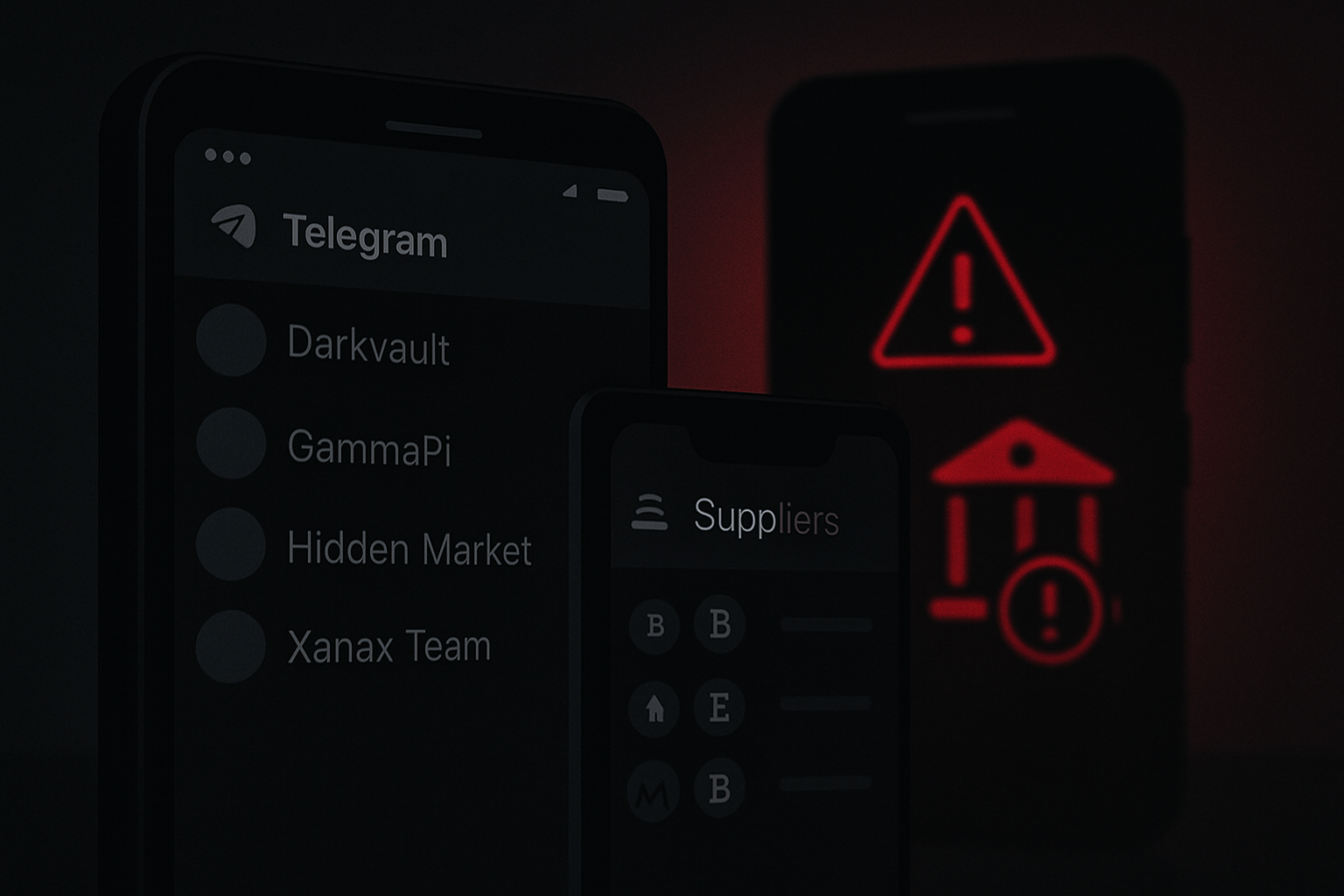
The emergence of RedWing illustrates a troubling shift in the economics of cybercrime: malware has become a rentable commodity, stripped of technical barriers and sold as a consumer service. Rather than requiring specialist knowledge, criminal operators now lease ready-made banking trojans through informal Telegram channels, fundamentally lowering the skill floor for large-scale fraud.
The MaaS Model and Market Consolidation
RedWing operates as a straightforward subscription service. For roughly $300 per month, operators gain access to a banking malware kit that automates the theft of credentials and one-time authentication codes. The service abstracts away complexity: the renter doesn't need to understand Android exploitation, network protocols, or server-side infrastructure. They receive a working tool and instructions, then deploy it against unsuspecting targets.
Research from Zimperium's zLabs attributes RedWing to a variant of Oblivion, suggesting that established malware families are being repackaged and resold rather than rebuilt from scratch. This consolidation matters: it means the criminal ecosystem is maturing into standardised distribution channels. A single well-maintained codebase can generate revenue from dozens of low-capability operators, each handling their own target acquisition and money extraction.
Technical Mechanics and Infection Vectors
RedWing targets Android devices through conventional infection vectors—malicious APK files distributed via phishing, trojanised app stores, or drive-by downloads. Once installed, the malware requests permissions that appear mundane to the user but grant access to SMS messages, accessibility services, and screen content. This combination allows the malware to intercept one-time passwords, monitor banking applications, and capture login credentials as they're typed.
The sophistication lies not in novel exploitation but in thorough automation. The malware handles session hijacking, credential relay, and automated transaction interception without operator intervention. A criminal with minimal technical knowledge can purchase access and point the malware at a target list, leaving the malware to handle the rest. This represents a significant departure from earlier banking trojans that required hands-on management.
Infrastructure and Distribution Implications
RedWing's reliance on Telegram as a marketplace reveals the infrastructure supporting modern fraud. Telegram's channels, with their pseudonymous group ownership and poor moderation, function as underground bazaars. Criminal operators maintain customer support channels, distribute updates, and handle disputes—mirroring legitimate SaaS operations with the legal accountability removed.
The subscription model also implies backend infrastructure: command-and-control servers, credential aggregation databases, and perhaps payment processors. These servers must handle high volume while evading network-level takedowns. Offshoring command infrastructure to permissive jurisdictions becomes essential; a breach or IP-based law enforcement action against a single region affects the entire customer base.
Detection and Mitigation Gaps
RedWing's effectiveness depends on remaining undetected in Android app stores and user devices. Standard antivirus signatures work only after samples reach security vendors; the malware's rental distribution model means thousands of variants emerge as customers modify and recompile the payload. Polymorphic packaging and code obfuscation become standard practice when each renter needs a unique sample to evade their target's specific security tools.
Banks respond by hardening authentication—moving away from SMS one-time codes toward push notifications and biometric verification. However, newer variants of RedWing target accessibility-based screen recording, which can capture push notification responses directly. An ongoing arms race emerges, with each defensive innovation met by malware adaptations.
The Rental Model's Sustainability
The sustainability of RedWing and similar services hinges on three factors: reliability, anonymity, and profitability for operators. A malware service that frequently crashes or gets detected loses customers. One that requires cryptocurrency payments traceable to real identities fails the anonymity requirement. One that extracts so much money that targets notice immediate fraud signals loses effectiveness. RedWing appears to be navigating these constraints well, which suggests either a well-organised operator or a franchise model where multiple teams manage different regions or target verticals.
The $300-per-month pricing point is crucial. It's low enough for opportunistic criminals to trial it, yet high enough to generate meaningful revenue if even 50–100 active customers maintain subscriptions. Compare that to the earnings potential: a single compromised business banking account might yield tens of thousands in fraudulent transfers. The unit economics are compelling.
RedWing's rise underscores a broader security reality: the barrier to entry for financial cybercrime continues to fall. Infrastructure that once required significant investment and expertise is now available as a subscription rental. Infrastructure operators and security teams must assume that basic banking malware will remain actively deployed against their users and systems, and that blocking a single variant addresses only a fraction of the problem.